Get a heavy-duty centerless grinder to stabilize your production quality; click now to review specs and financing plans.
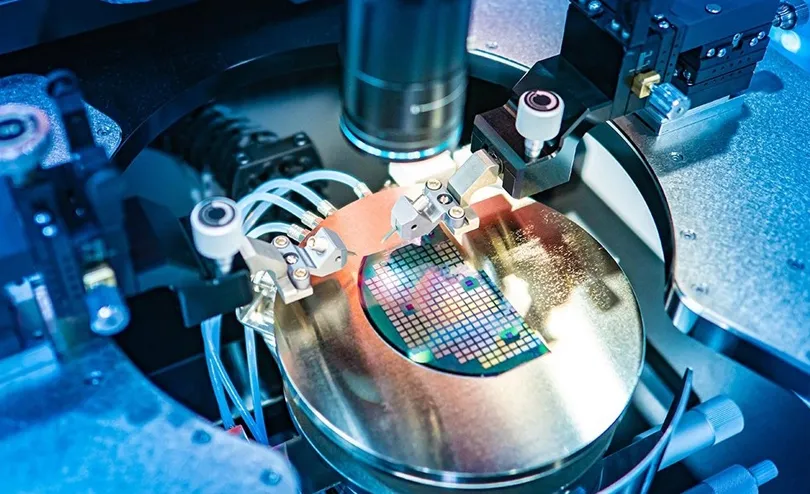
Surely changing up-to-date consistency construction involves well-trained tools along with extensive High-Precision Surface Grinding Machine procedures.
Super-fine surface smoothing signifies a crucial subset of modern processing, permitting the manufacture of parts with exceptionally fine criteria. Surface grinding, a regular approach, is well-suited for making flat markings with unmatched correctness, finding applications in tool construction and holder manufacture. Precision round finishing, conversely, is particularly suited for fabricating tube-shaped parts to accurate dimensions and external finishes, removing the need for a support and so obtaining higher dimensional steadiness. The choice of adequate lapping rollers, refrigerants, and grinding parameters is critical to maximizing part performance and reducing turnaround time.
Automated lapping apparatus are strongly reshaping refined fabrication systems internationally, in the past, hand-operated finishing was time-consuming and liable to human fault, culminating in unreliable excellence. However, state-of-the-art Robotized planar tools grant unrivaled levels of meticulousness, consistency, and capacity. The stated mechanized platforms exercise digital directors to meticulously lead abrasive blades, empowering for the assembly of intricate forms and most plane surfaces with minimized rejection and augmented creation speeds. A potential to direct complex abrasive courses besides helps one construction of vital elements in domains namely aeronautical, car assembly, and hospital device fabrication.
Precision Grinding Clarified: Securing Unmatched Geometry and Physical Rectitude
Precision abrasive machining offers a particular method for fabricating items with exceptionally demanding tolerances. Unlike conventional machine operations that necessitate a center support, centerless finishing utilizes two oscillating abrasives: a coarse work abrasive wheel and a regulating regulating grinding wheel. The part is fed laterally amongst these rings, with the control roller excising material. This operation creates a cylindrical profile with superior symmetry and spatial fidelity. It’s particularly suited for mass production of spindles and other ring-shaped units.
- Delivers unparalleled circularity.
- Acquires precise physical tolerances.
- Avoids the need for mounts.
- Proper for bulk production.
Every Evolution pertaining to Surface Abrasive Finishing: From Manual to CNC Technique
Such progression in surface grinding demonstrates a substantial shift from physical methods progressing to sophisticated CNC robotics. Initially, the practice relied primarily on the expertise from the technician, demanding extensive experience and generally resulting in uneven products. The emergence of Computer Numerical Control (CNC) upgraded this industry, providing exceptional accuracy, cut manpower requirements, and promoted the creation alongside challenging forms with outstanding steadiness. Now, CNC surface grinding operates as a key element relevant to contemporary construction techniques.
Electing a Optimal Surface Treatment Apparatus: Smooth vs. Off-Center
Once it concerns to meticulous honing, opting for making a choice between flat and radial installations proves to be decisive. Horizontal machining functions preferable for items mandating plane surfaces and usually includes anchoring the unit over a bench. While, centerless lapping makes possible notable precision for creating circular figures and remains via fixed item anchoring. Ergo, painstakingly evaluate your unique usage in advance of completing selected final selection.
Enhancing Efficiency: Streamlining Your Surface Grinding Procedure
So as to reach best yield in your surface grinding function, a in-depth examination of your live workflow is fundamental. This entails thorough inspection of different factors. Begin by analyzing wheel decision; the fitting abrasive class and class are critical for steady material extraction. Additionally, adjust your advance rate and depth of division to lower cycle times without weakening surface sheen. Lastly, implement a robust maintenance program to avoid unexpected downtime and safeguard uniform efficiency.
- Contemplate wheel stability for reduced vibration.
- Modify coolant administration to amplify thermal regulation.
- Implement advanced watching systems for current data.
Centerless Grinders: Roles and Assets in High-Tolerance Engineering
The radial machining tool embodies any fundamental device inside of meticulous fabrication. Its one-of-a-kind function to polish components without utilizing a positioning device supports for the production of distinctively symmetrical and uniform blocks. Frequent applications include the fabrication of accurate cylinders, bushings, mechanical parts, and multiple technical parts situations where critical bounds are important. Advantages comprise optimum quality, boosted stock withdrawal rates, and the effectiveness to develop long components with consistent rigor.Leading-Edge Functions in Finer CNC Grinding Apparatus
Cutting-Edge exact CNC polishing apparatus incorporate a range of cutting-edge elements that decisively improve output. These possess adaptive control processes that automatically adjust grinding based on up-to-the-second workpiece conditions. Besides, high-tech tool track planning methodologies minimize component cutoff and raise appearance finish. Elements such as advanced fixing tools, joined metrology tools, and automatic control processes bolster to supreme consistency and effectiveness. Users can also benefit intuitive control displays and robust assessment systems.
- Intelligent feedback loops
- Robotic fixture arrangements
- Incorporated calibration systems
Surface Polishing vs. Rotary Abrasion: A Complete Evaluation
Approach selection is important when gaining accurate {dimensional|geometric|size|