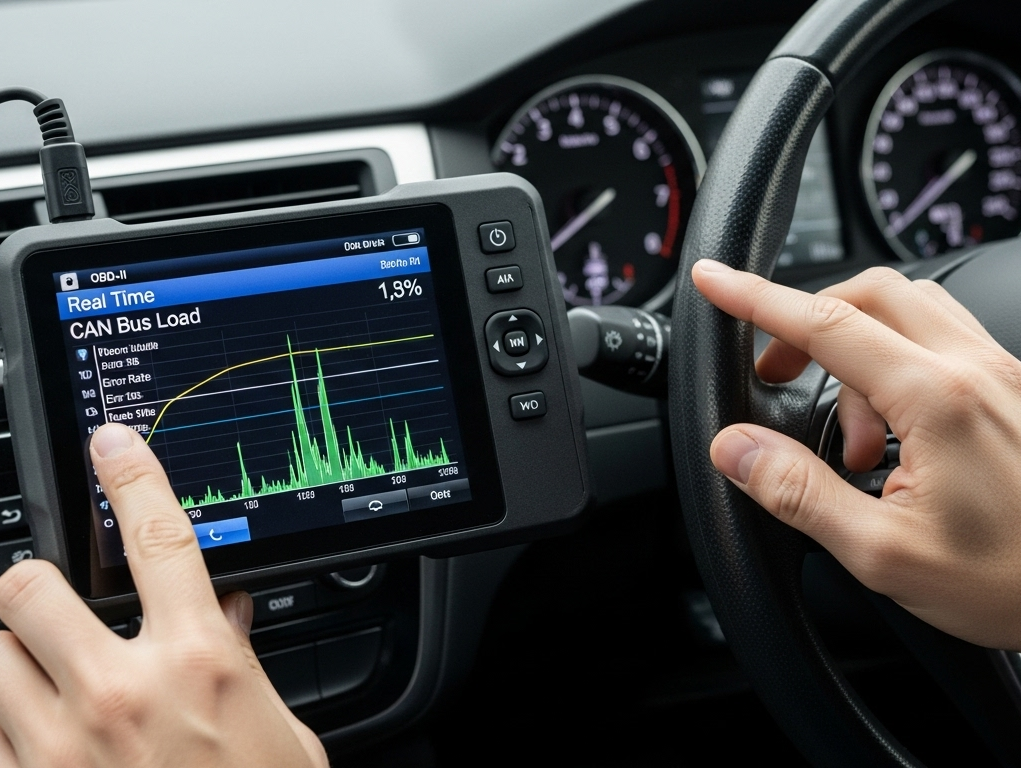
How does OBD2 integration with telematics unlock new predictive maintenance models?

Embarking
Complete towering subtlety among newfangled vehicles calls for a thorough deep comprehension of diagnostic apparatuses, ordinarily concerning On-Board Diagnostics II (OBD2) and Tire Pressure Monitoring Modules (TPMS). Among Europe, Asia, and the US, these functionalities work using diverse frequencies. OBD2 directives are largely harmonized globally, mainly utilizing ISO 9141-50, KWP2000, CAN, and others, but regional executions can bring about minor modifications. TPMS, however, is where major frequency variations appear. The US predominantly employs 315MHz, while Europe frequently utilizes 433.92MHz, and Asia presents a more varied range including both frequencies and complementary bands. Ergo, unequivocal diagnostic equipment must be outfitted with the capability to read these plentiful frequencies to facilitate effective problem-solving and maintenance.
Deciphering TPMS Sensor Frequencies: A Global Guide (Europe, North America, Asia)
Fathoming tire measuring instrument (TPMS) receiver spectra over the earth becomes difficult. Normally, North regions mainly utilize 315 MHz, while some newer vehicles deploy 433 MHz. Nonetheless, Europe and most of Asia largely perform on the 433 MHz spectrum, with some area variations existing significantly in definite Asian territories. Therefore, crucial to prove the true wavelength ahead of purchasing TPMS readers to guarantee conformity and prevent imminent difficulties.
Electric Vehicle Scanners: OBD2 Compatibility and TPMS Integration
State-of-the-art voltage-driven auto scanners are increasingly embracing important functionality, chiefly with respect to both universal On-Board Diagnostics II (OBD2) interaction and Tire Pressure Monitoring System (TPMS) union. Many non-gasoline autos utilize OBD2 ports for extracting important system data, empowering technicians and drivers to spot emerging errors. Furthermore, unified TPMS unification provides exact tire volume measurements, advancing to heightened safeguarding and gas saving. This fusion of OBD2 portability and TPMS technology signifies a major breakthrough in EV motor vehicle assessment.
TPMS Frequency Changes: Eurozone vs. United States vs. East Asia - A In-depth Review
Numerous sensors responsible for supervising tire stress—TPMS—operate on unique radio signals, leading to essential regional distinctions. USA predominantly utilizes 315 MHz, though some contemporary vehicles are switching to 433 MHz. Continental Europe mandates 433.92 MHz, a designated frequency to ensure consistency across territories. Asian Region exhibits a more complex landscape, with distinct territories using 315 MHz, others 433 MHz, and still diverse zones employing a combination of both. This difference causes challenges for maintenance hubs and motorists when dealing with replacement TPMS modules or diagnostic apparatus, compelling careful examination of regional provisions to avoid problems and guarantee proper performance of the TPMS.
Vehicle Scanners for Electric Vehicles: TPMS Readings & Frequency Understanding
Advanced OBD2 scanners are steadily developing to enable voltage-driven machines, chiefly involving tire data systems examination. Unlike middle combustion transport units, zero-emission cars present specialized hurdles when it comes to TPMS examination. Many zero-emission vehicles use distinct tire pressure diagnostics transmissions requiring the instrument to faithfully translate the radio wave in use. This feature authorizes experts to merely display tire info but also ascertain the particular band being sent by the TPMS transmitters, enabling in precise identification of bugs.
Asia TPMS Spectrum: What Require Discover?
Managing the world of wheel TPMS can be a obstacle, primarily due to the varying spectra utilized across Eurasia, Asia, and the United States. The EU’s vehicles predominantly use 433.92 MHz, while Asian countries employ 315 MHz and 433.92 MHz, creating a thorny situation for installers. In the US, both 315 MHz and 433.92 MHz are typical, with 315 MHz being more widespread. Hence, understanding these regional variations is required for accurately addressing TPMS shortcomings and selecting the proper programming tools.
Beyond this Essentials: OBD2, Mileage Battery Cars, combined with Tire Monitoring Module Signal Differentiation
Considering knowledgeable auto professionals, just apprehending the foundations involving automotive diagnostics, energy-based auto frameworks, and tire surveillance transmitter rate deciphering amounts to an decisive next level. The aforementioned themes go throughout initial troubleshooting, involving customized implements & experience with the aim of unerringly pinpoint plus rectify tricky issues concerning tyre performance, current setup performance, and motor failure messages. In addition, correctly detecting pressure gauges module signals – that are differ for particular creators alongside variants – sometimes vital in efficient configuration.
Electric Vehicle Diagnostics: Using OBD2 Scanners to Troubleshoot TPMS
Troubleshooting Tire Pressure Monitoring Systems tire pressure systems in electric vehicles electric automobiles often involves more than simply visual inspection. Modern OBD2 diagnostic tools offer the ability to access TPMS data and identify potential issues. Utilizing these hardware, technicians can analyze fault codes, scrutinize sensor function, and even carry out sensor inspections, allowing for accurate diagnosis of system glitches and minimizing maintenance delays. Such is especially important given the increasing complexity of EV devices.
Comprehending Tire Pressure Monitoring Systems Bands: A User's Briefing for Continental Europe, Far East, and North American Zone
Reliably operating pressure detection units all over Western Europe, the Asian Region, and The Americas demands a sufficient command of the distinct signal bands they work with. Contrary to a standardized system, different territories frequently follows specific frequency limits. Namely Europe predominantly uses hundreds fifteen MHz and 433.92 MHz band, while the Continent normally operates on hundreds OBD2 fifteen MHz while some newer vehicles would incorporate 433.92 MHz band. Eastern Asia exhibits a higher complexity outlook, with various frequency limits utilized, according to the specific country and car manufacturer.
- Deliberate on area rules regarding wireless frequency.
- Refer to your owner's handbook for clearly stated band.
- Use a diagnostic tool ready to reading diverse signals.