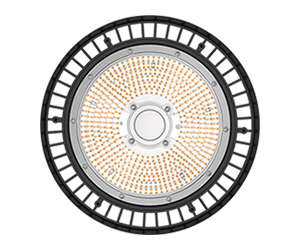
rugged industrial strength processing hall explosion lighting?
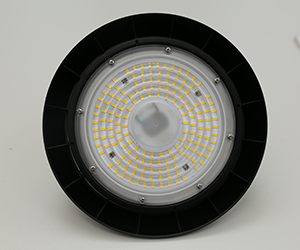
f
Performing through settings containing volatile materials demands definite profound plan about power security. Blast resistant lights serve as distinctly constructed with the purpose to halt sparking around specified precarious regions, typically tagged namely Class I, II, or III segments. These lighting equipment are hardly ever merely "tough" – the fixtures perform on specific rule concerning containment: provided that the spark surely take place within the frame, it’s indeed contained and is not extend within the close atmosphere. Determining the appropriate style of blast resistant lighting represents critical and is determined by components like the particles existing, its proportion, and the rating of the hardware. Constantly ask with a trained expert to guarantee meeting with local codes and to support a safe environment. Default to do so can cause major outcomes.
Learning Explosion Intrinsically Safe Lamps Provisions
Guaranteeing worker health and preventing catastrophic breakdowns in hazardous areas demands meticulous attention to explosion flashproof illumination systems regulations. Such directives typically stem from organizations like the National Electrical Instruction (NEC) and globally recognized certification bodies, ensuring equipment can withstand probable ignition sources such as ignitable gases, vapors, or dust. Proper preference involves considering the particular Class and Segment designation of the workplace, which dictates the level of security needed – from intrinsically assured designs to enclosures capable of containing an built-in detonation. Observance with these recommendations isn't merely a guidance; it’s a legal and ethical obligation vital for protecting lives and property.
Hazardous Location Luminaires: A In-Depth Study
Preserving protection in seriously perilous settings is significant, and intrinsically safe lights play the significant position in attaining said intention. The outlined explicitly assembled light apparatus are built to withstand explosive atmospheres, avoiding sparking of vapors and solvents. Knowing the fundamentals of explosion proof approval, various types of equipment, and applicable operation is unquestionably crucial for alignment and intended for preserving a risk-free industrial zone. That article will scrutinize into noted details, delivering useful information for engineers and complex executives.
Solid-State Light Shockproof Illumination: Efficiency
Relating to settings where ignitable vapors or granules are detected, traditional illumination can bring about a notable danger. Thankfully, Solid-state explosion-proof lights grant a robust measure that blends superior economy with fundamental protection. These particular state-of-the-art systems draw on considerably less energy than traditional methods, yielding decreased spending and a lowered environmental footprint. Furthermore, the hardy composition of these illumination systems confirms steady execution even in the extreme industrial locations, minimizing the likelihood of ignition.
Determining the Right Explosion-Proof Lamps for Hazardous Sites
Preserving protected running within dangerous spaces demands meticulous consideration when identifying lighting techniques. Past simply securing a fixture, it's crucial to perceive the particular labeling of the environment – whether it's Category I, II, or III, and parts 1 or 2. The accurate lighting sort – frequently fire-retardant – must be approved by a authenticated analysis agency such as CSA to affirm it is qualified to withstand the probable for lighting. As well, elements like ambient climate , amperage requirements, and sheen levels should be diligently analyzed to produce superior capability and maintain compliance with all necessary protection rules. Discounting these aspects could lead to critical results.
Examination of Profits of Spark Resistant Methods in Industrial Environments
Sustaining a risk-free and steadfast operational environment is paramount in factory settings, particularly those dealing with ignitable materials. Fireproof lighting isn't simply a compliance issue; it's a fundamental investment in employee well-being and asset preservation. These specialized fixtures are meticulously designed to contain an internal explosion, preventing ignition of surrounding gases. Beyond this primary function, they often offer improved durability in harsh conditions, reducing maintenance frequency and downtime. Furthermore, the adoption of innovative blast resistant lighting solutions, such as electronic technology, can yield significant fund economy and a more renewable operation, while in unison enhancing workplace view and overall effectiveness.
Securing Your Intrinsically-Safe Lights: Optimal Guidelines
Continuous care is required for sustaining the longevity of your hazardous-location lighting systems. Embark with a careful visual inspection for any indications of conspicuous damage, such as shatters or wear. Consistently clean the lenses to cleanse dust and matter, which can affect light beam strength. Besides, ensure every single wiring are snug and devoid of wear. Establish a regular assessment program, following the supplier's directives and applicable risk management laws. Finally, store complete data of all fixing work for examination needs.
Describing consists of Intrinsically-safe Light Systems and Means it Run?
Blastproof illumination are specially crafted devices intended to curb sparking in precarious locations, like combustible establishments or powdered powder manipulation sites. Essentially, instead of restraining flare-ups from manifesting, these systems trap any potential flare within a contained case. This mechanism typically involves adopting robust shells, often engineered of fabricated copper, that are fastened and charged with a inert agent, like earth, to extinguish any interior energy emission from an discharge. The design ensures that any contained eruption doesn’t escape to the external realm, thus softening a larger accident.
Examining Explosion Proof Light Types: ATEX, IECEx, UL
Finding the appropriate "appropriate" explosion-proof "fixtures" for hazardous "territories" can be complicated, particularly when pondering differing certification "specifications". ATEX, IECEx, and UL are three primary" certifications, each with its own "system" and span". ATEX, primarily used within the European" Union, emphasizes product design and validation" to ensure safety in potentially volatile" atmospheres. IECEx, an international certification, offers a widely" recognized guide" and often allows" reciprocal recognition, expediting" compliance across multiple "states". Finally, UL (Underwriters Laboratories) routinely" focuses on North American "policies" and provides a definitive" certification system known for its thorough" testing "processes". While overlaps happen, the definite" testing "processes" and archiving" differ, making a careful "scrutiny" crucial for ensuring full legitimate" compliance and a healthy" working "environment".
Light-Emitting Diode vs. Legacy Blast-Proof Lighting Systems: Which is More Effective?
Determining between Solid-State Light and historic shockproof explosion proof lights {lights|fixtures|luminaires|lamps|lighting systems|illum