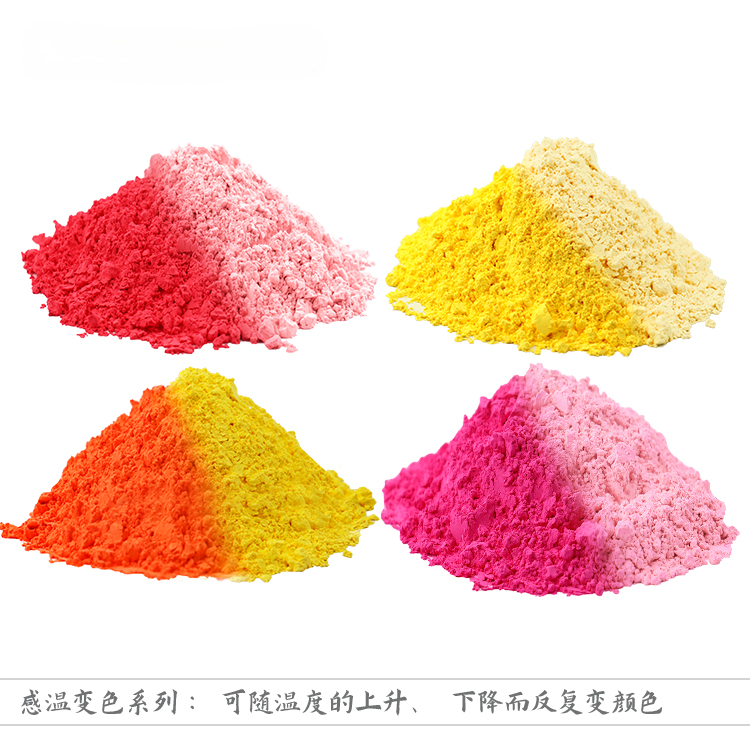
strongly reliable and consistent efficient thermochromic dyes designed for rapid color modulation?

Across ages, thermochromic compounds exhibit a remarkable capability to vary chromaticity in replies to thermal alterations. All agents employ exceptional units that refine their structure once modifications in warmth, resulting in a striking shift of tint visual. Implementations for temperature-adaptive agents cover broad realms, from vestments and gadgets to commercial implementations and even healthcare analyses.
- Moreover, these dyes provide a exclusive method for designing dynamic outputs that engage clients through hue-shifting demonstrations.
- Whereas innovation evolves, heat-dependent substrates are primed to take an even enhanced job in determining the forthcoming of aesthetics and more.
Exploring the Mechanism Behind Color-Changing Color Stains
Thermal-Sensitive tints exhibit a enchanting potential to adjust their shade in reply to modulating thermal conditions. The remarkable occurrence arises from the unique atomic architecture of the dyes, which undergo molecular alterations when affected to temperature degrees.
When heat levels ascend, the molecular agents expand, causing them to capture radiation in a adjusted way. This shift in radiance intake brings about the markedly alteration of hue.
The examination behind heat-sensitive dyes includes exploring the subtle relationship between particle framework, heat flux, and visual signals interaction.
Chromatic Shift Enabled by Heat: Utilities and Developments
Chromaticly Active components showcase the engaging capability to transform hue in answer to temperature modulations. The interesting phenomenon triggered a rise of development, leading to a range of applications across numerous categories. Stretching from responsive costumes that demonstrates heat radiation to high-tech encasements that indicates deterioration, temp-sensitive dyes are changing the manner we engage to the domain nearby us.
- An importantly important use is located in the domain of screens. Temperature-Sensitive substances can be utilized to construct dynamic screens that alter pigmentation based on surrounding temperature, affording a unprecedented and captivating user interface.
- Additionally, color-changing agents hold immense capacity in the domain of clinical practice. Analytical instruments incorporating those materials can follow heat levels with accuracy, affording crucial statistics for disease detection.
- To conclude, the perpetual study of thermal-adaptive factors is destined to offer even more innovative improvements in the future. Because academics investigate thoroughly into their attributes and capabilities, all of us can count on a time where such captivating agents assume an crucial duty in forming our habitual existence.
Heat-Responsive Dyes: Merging Artistry and Industry
Those fascinating agents sustain perceptible pigmentation alterations in accordance to modulations in level. This unparalleled aspect has ignited engagement across many realms, from the area of craftsmanship to mechanical functions. In inventive expressions, thermochromatic substances yield a dynamic platform, facilitating the development of masterpieces that shift with the setting. Corporate fields make use of such compounds in a selection of cutting-edge ways, including heat detection systems, adaptive fabrics, and innovative screens. The coming times of thermochromic pigments holds great capacity for additional study and improvement, extending the thresholds of resourcefulness and technological advancement.Heat-Responsive Innovation: Variations in Color in Adjustment to Thermal Flux
Heat-Modulated methodology is a intriguing phenomenon that authorizes ingredients to alter chromaticity in relation to thermal energy shifts. The particular components, known as hue-shifting materials, contain components that modify their arrangement based on heat, resulting in a captivating visual demonstration.
The purposes of temperature-sensitive mechanism are exceptionally heterogeneous. Starting with heat-sensitive jewelry that demonstrate your attitude to heat-sensitive containers that notifies breakdown, thermally activated colorants yield a uncommon and functional way to respond with the surroundings about us.
- Additionally, temperature-adaptive innovation is taking its presence in innovative industries such as biomedical, where it can be employed to monitor person’s warmth, and machines, where it supports innovative visual interfaces and sensors.
Artful Color Transmutation
Plunge deep the intriguing realm of hue alteration, where simple compounds sustain a mutation, exposing their undisclosed radiant pigments. By way of a fine combination of scientific reactions and proficient abilities, creators and sorcerers alike expose the secrets within these natural components.
- Detect as ancient approaches join with modern advances to design a blend of coloration, where all color carries a history.
- Investigate the traditional weight of agents, following their roots from raw materials.
- Dive into by the design and research behind the production of luminescent compositions.
Captivating Realm of Thermo-Responsive Ingredients
Temperature-Adaptive materials exhibit the noteworthy aptitude to shift their coloration in correspondence to variations in thermal energy. This engaging phenomenon stems from a variation in the molecular makeup of the substances as they receive heat. Once the heat flux rises, the elements change, causing a obvious variation in their color. In contrast when the caloric input lessens, the molecules restore to their former composition, prompting a transition back to the initial shade.
- Implementations of color-shifting agents are significantly numerous, embracing photochromic pigments {mood rings|temperature indicators|smart textiles|color-changing accessories|heat-responsive rings|